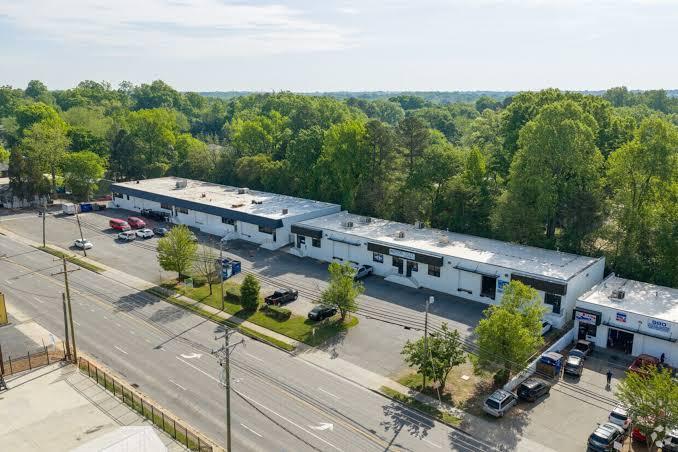
Small Bay Industrial Real Estate: What Investors Should Know Before Buying
Small bay industrial real estate has moved from a specialized corner of the commercial property market into a focus area for many investors. These properties typically contain smaller warehouse, flex, contractor, service, or light-manufacturing spaces rather than one massive distribution facility. They may be located in infill areas closer to customers, suppliers, labor, and established transportation routes.
For investors, the appeal is practical. Local businesses need usable space, loading access, parking, storage, and reasonable proximity to the markets they serve. For owners, the opportunity may come from improving occupancy, upgrading an older building, managing tenant turnover, or bringing below-market rents closer to current market levels.
Small bay industrial is not a simple “buy and collect rent” strategy. Smaller suites can create a larger number of lease events, maintenance requests, tenant conversations, and operating decisions. The asset class can reward strong execution, but the underwriting must reflect the work involved.
What is small bay industrial?
There is no single universal size definition used in every market. In general, small-bay industrial refers to smaller industrial buildings or suites that serve local and regional users. The Commercial Real Estate Development Association recently described small-bay industrial as sub-100,000-square-foot space, either in stand-alone buildings or multitenant properties. These properties may include dock-level or grade-level loading and can support businesses such as contractors, local distributors, light manufacturers, building suppliers, and logistics operators.
A small bay industrial property may be:
•A multitenant warehouse with several independently leased suites.
•A flex industrial building combining warehouse and office space.
•A contractor-oriented facility with drive-in doors and yard or parking areas.
•A light-industrial building serving local production, repair, storage, or distribution users.
•An older warehouse that can be repositioned through better leasing, maintenance, and tenant management.
The right definition depends on the local market and the asset’s physical configuration. Square footage alone does not determine whether a property is a good small-bay opportunity.
Why the small bay industrial investment thesis is different
Local demand can support smaller spaces
Many businesses do not need a 500,000-square-foot distribution center. They need a practical unit for inventory, equipment, vehicles, fabrication, dispatch, or customer service. Smaller industrial suites can give growing companies room to operate without committing to a much larger footprint.
Infill locations can be difficult to replace
Industrial land near established neighborhoods, highways, labor pools, and customer bases is limited. New construction may face land costs, zoning, utility, entitlement, and construction challenges. A well-located older property may have value because it already occupies a useful location, even if the building needs modernization.
Tenant diversification can reduce single-tenant dependence
A multitenant building does not rely on one lease for all revenue. That can improve diversification, but it also introduces more lease administration and turnover. A property with ten tenants may experience ten different renewal decisions, maintenance expectations, credit profiles, and business cycles.
Value-add work can be operational rather than cosmetic
Value creation may come from more than a new façade. It can include correcting deferred maintenance, improving access, upgrading lighting, reducing utility waste, clarifying signage, creating better unit layouts, increasing occupancy, and improving lease administration. The most important improvement may be better execution.
The five fundamentals to evaluate
1. Location and access
Industrial tenants care about travel time, truck access, road conditions, turning radii, parking, loading, visibility, and proximity to customers and suppliers. Map the property against major highways, population centers, labor pools, competing industrial inventory, and surrounding land uses.
A building can have a strong address but poor functionality. Visit the site during business hours and inspect how vehicles enter, load, park, and leave. Review any restrictions on truck size, operating hours, outdoor storage, signage, or noise.
2. Building functionality
The physical building should match the needs of its target tenants. Review clear height, column spacing, floor loading, sprinkler systems, electrical capacity, HVAC, roof condition, dock-high and drive-in doors, parking, drainage, office ratios, and the condition of paving and exterior areas.
A small bay industrial building can have strong demand but still require significant capital. Obtain appropriate inspections and estimates. Do not assume that a functional-looking warehouse has no hidden roof, structural, environmental, or code issues.
3. Tenant quality and lease rollover
Read every lease. Analyze tenant industry, credit, rent, deposits, options, renewal dates, escalations, expense reimbursements, exclusives, termination rights, maintenance obligations, and insurance requirements. Then create a lease-expiration schedule.
A property with several leases expiring in the same year may carry more rollover risk than a property with staggered maturities. A below-market rent can be upside, but only if the tenant can afford the increase and the market can support it. A short lease can create flexibility and risk at the same time.
4. Supply and competition
Study comparable small bay industrial properties, not only large distribution centers. Compare asking rents, effective rents, vacancy, concessions, unit sizes, access, amenities, and lease-up speed. A market may have low overall industrial vacancy but still have excess supply in the specific unit sizes or locations relevant to your property.
The Commercial Real Estate Development Association reported that demand for smaller industrial properties has been an important part of the broader industrial recovery and that new small-bay supply has remained limited in some markets. Local diligence is still essential because national trends do not automatically translate into a specific submarket.
5. Management intensity
Small bay industrial can be management-intensive. Tenant turnover, frequent repairs, signage, parking, trash, access control, loading conflicts, and collections may require more attention than a single-tenant asset. Underwrite property management realistically and ask who will handle leasing, maintenance, tenant communication, and capital projects.
Small bay industrial in Pittsburgh and surrounding markets
The Oak and Clay Group states that it targets Class B and C warehouses with upside potential in Pennsylvania, Ohio, West Virginia, and Maryland. Its public materials describe a focus on well-located industrial warehouse assets, operational improvements, and tenant growth. That regional focus aligns with the broader Rust Belt and Mid-Atlantic context, where older industrial buildings may serve established business corridors and local economic networks.
The company also describes a Pittsburgh-area pre-leasing opportunity for small to mid-bay warehouse spaces ranging from 1,000 to 10,000 square feet in the Northside of Pittsburgh. The page highlights flexible layouts, at least one drive-in door per unit, possible dock-high doors depending on bay size, and uses such as light manufacturing, warehousing, distribution, and flex-office. Availability, pricing, delivery, and final specifications should be confirmed directly with the project team. Visit the pre-leasing page for current details.
A disciplined underwriting checklist
Before buying or investing in a small bay industrial property, model:
•Current and stabilized occupancy.
•In-place rent compared with market rent.
•Lease rollover and downtime.
•Tenant improvements and leasing commissions.
•Roof, paving, doors, HVAC, electrical, and life-safety capital needs.
•Property taxes, insurance, utilities, repairs, and management.
•Environmental and zoning considerations.
•Financing terms, debt-service coverage, maturity, and refinance risk.
•Exit value under conservative, base, and downside assumptions.
•Sensitivity to vacancy, rent growth, construction costs, and interest rates.
The most useful model is not the one with the highest projected return. It is the one that shows what must go right, what can go wrong, and how much room the investment has to absorb a setback.
Small bay industrial is an operating business inside a building
Investors should think of small bay industrial real estate as both a property and an operating platform. The building matters, but the leasing plan, tenant mix, management systems, and capital program often determine whether the business plan succeeds.
For investors seeking more information about the strategy, The Oak and Clay Group’s investment page explains its value-add commercial real estate focus, while the investor guide provides educational material for accredited investors. Review offering-specific disclosures and consult independent advisors before investing.