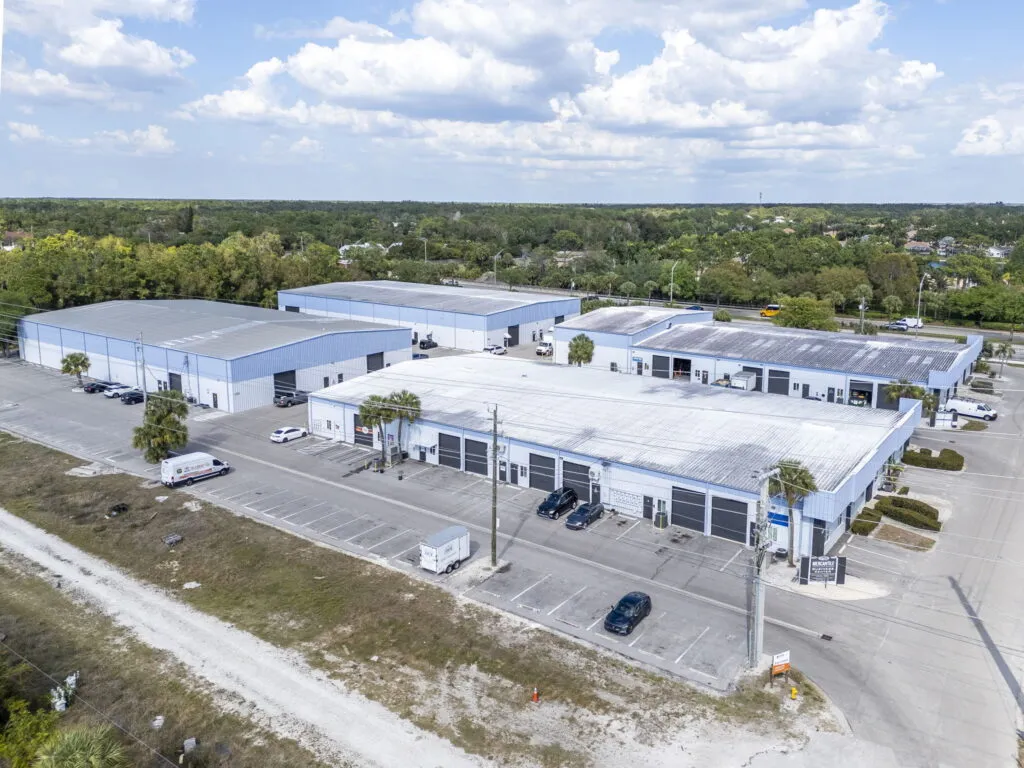
Small-Bay Industrial Real Estate: Why Flexible Space Matters
Small-bay industrial properties serve a segment of the commercial real estate market that is easy to overlook and difficult to replace. These properties typically divide a larger industrial building into smaller suites that can accommodate contractors, distributors, service businesses, fabricators, logistics operators, and other local companies.
The exact size range varies by market and property type. The defining characteristic is not a single square-foot threshold. It is the combination of smaller rentable suites, practical loading access, usable warehouse space, and proximity to customers, labor, and transportation routes.
For business tenants, small-bay industrial can provide a more functional alternative to retail, office, or oversized warehouse space. For owners and investors, the format can offer multiple leasing opportunities within one asset. That opportunity comes with operational responsibilities that require careful analysis.
What makes a property “small-bay industrial”?
A small-bay industrial building may include several independently leased units under one roof. Suites can vary in layout, ceiling height, loading configuration, office finish, parking, and permitted use. Some properties are designed for warehouse and distribution tenants. Others are more flexible and accommodate light manufacturing, contractor storage, showroom-office combinations, or service operations.
Property feature | Why it matters |
Suite size | Smaller units can serve businesses that cannot justify a large industrial lease. |
Clear height | Height affects storage capacity and the usefulness of racking or equipment. |
Drive-in or dock loading | Loading access influences tenant operations and delivery efficiency. |
Parking and circulation | Employees, customers, vans, and trucks need safe and practical movement. |
Zoning and permitted use | The legal use must match the tenant’s business activity. |
Power and utilities | Electrical capacity, gas, water, and HVAC can limit or expand tenant uses. |
Location | Access to labor, highways, customers, and suppliers affects leasing demand. |
No single feature determines value. A building with excellent location but poor loading may appeal to a different tenant profile than a building with high clear height and multiple drive-in doors.
Who leases small-bay industrial space?
The tenant base often includes businesses that need more than an office but less than a major distribution center. Examples may include electrical and plumbing contractors, specialty fabricators, building-material suppliers, e-commerce operators, repair companies, food-related businesses, local distributors, and trade-service providers.
The variety of users can diversify a property’s rent roll. It can also create management complexity. Different tenants may have different hours, vehicle needs, utility consumption, insurance requirements, and maintenance expectations. Owners should evaluate whether the property’s physical design and operating plan can support the intended tenant mix.
Why tenants value flexibility
A small-bay tenant often wants to keep a business near its existing customers and employees without paying for unused square footage. A practical suite can provide storage, work areas, inventory space, and a modest office component in one location.
Flexibility also matters during growth. A tenant may begin in one bay, add adjacent space, or relocate within the same property as operations change. Buildings with divisible suites and straightforward expansion options may create more leasing choices than single-user industrial properties.
The owner’s operating checklist
Owners should look beyond current occupancy. Review the lease expiration schedule, renewal history, tenant credit, rent increases, recoveries, maintenance obligations, and capital needs. A property may appear fully leased while still facing near-term rollover, below-market rents, or deferred roof and paving work.
Before acquiring or repositioning a small-bay industrial asset, analyze the following:
1.Rent-roll durability. Identify which tenants are established, which are month-to-month, and which leases expire soon.
2.Suite functionality. Confirm that bays are genuinely usable for the target tenant profile.
3.Capital requirements. Inspect the roof, structure, paving, drainage, loading doors, electrical service, fire systems, and mechanical equipment.
4.Expense recoveries. Verify how taxes, insurance, utilities, maintenance, and common-area costs are allocated.
5.Zoning and compliance. Confirm current and likely future uses with the relevant local authorities.
6.Market positioning. Compare asking rents, concessions, vacancy, and tenant demand for similar industrial space.
Common mistakes in small-bay industrial analysis
A frequent mistake is to underwrite the property using only the current rent roll. Small-bay assets can have many leases, which makes rollover timing and tenant-level assumptions important. Another mistake is to treat all industrial square footage as interchangeable. A shallow bay, limited loading, or inadequate parking can materially affect leasing prospects.
Owners should also avoid assuming that every tenant improvement produces the same return. A build-out that helps one use may limit future flexibility. Before spending capital, consider the likely tenant pool and the expected lease term.
When to bring in a commercial real estate advisor
Professional guidance can be useful when an owner is evaluating a purchase, renewing multiple tenants, planning a sale, or deciding whether to divide or recombine suites. The Oak and Clay Group can help owners assess property positioning, tenant demand, lease strategy, and market timing through a small-bay industrial advisory conversation.
Frequently asked questions
Is small-bay industrial the same as flex space?
Not always. Flex space generally combines office, showroom, warehouse, or light industrial functions. Small-bay industrial describes a smaller-suite format and may or may not have substantial office or showroom space.
Is small-bay industrial only for investors?
No. Owner-users and operating businesses may also purchase small-bay properties for their own operations, future expansion, or a combination of occupancy and leasing income.
What should a tenant inspect before signing a lease?
A tenant should evaluate access, loading, clear height, utilities, power, ventilation, parking, permitted use, fire and life-safety systems, signage, and the condition of the roof and structure. A business may also need professional advice regarding environmental, zoning, or operational requirements.
Bottom line
Small-bay industrial is valuable because it connects practical space with the needs of businesses that are too operational for conventional office or retail and too small for a large distribution facility. Its success depends on the details: suite design, loading, access, tenant mix, lease structure, expenses, and long-term capital planning.
Call to action: Explore how your industrial property is positioned with The Oak and Clay Group through the commercial real estate services page.