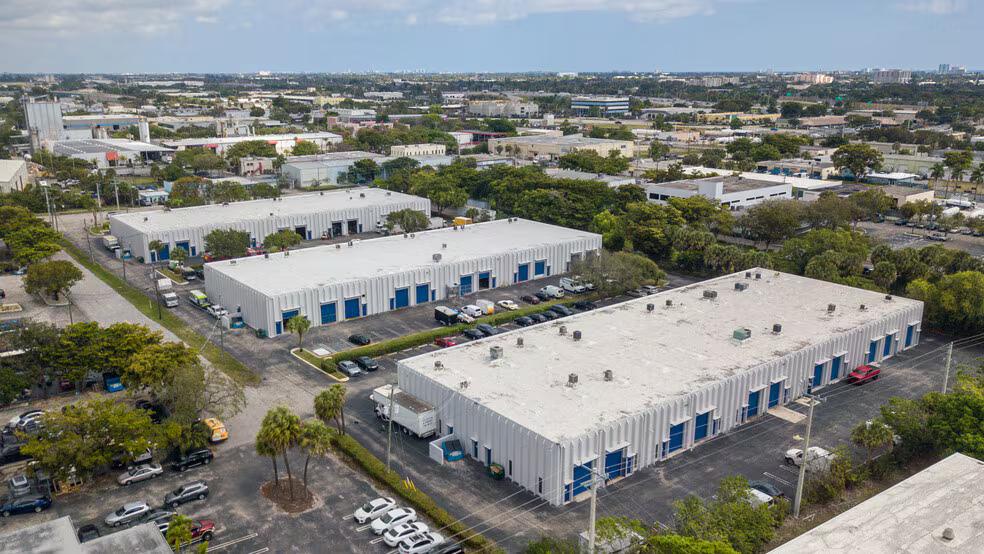
Passive Investment in Small-Bay Industrial: How to Underwrite the Partnership, Not Just the Property
Passive does not mean effortless or risk-free
Passive investment in small-bay industrial real estate can appeal to investors who want exposure to commercial property without managing leases, maintenance, contractors, financing, and tenant issues themselves. In a syndication or partnership, multiple investors contribute capital while a sponsor or operating partner manages the acquisition and business plan.
That structure can reduce the day-to-day workload for an investor. It does not remove investment risk, make returns predictable, or replace due diligence. A passive investor is still underwriting a property, a market, a sponsor, a partnership agreement, a capital stack, and an exit strategy.
The central question is not only, “Is this a good building?” It is also, “Is this the right sponsor and structure to execute the plan?”
The six layers of passive-investment underwriting
Layer 1: The property and its tenants
Begin with the real estate. Review location, access, building condition, suite sizes, loading, parking, zoning, environmental conditions, and competitive supply.
Then analyze the tenants:
•Who occupies each suite?
•What industries do they represent?
•When do leases expire?
•How much rent is concentrated in the largest tenants?
•How often have rents been increased?
•Are tenants paying on time?
•Who pays taxes, insurance, maintenance, and utilities?
•Is the projected rent growth supported by comparable leases?
Small-bay industrial can benefit from demand among local operators and service businesses, but tenants still face business cycles, relocation choices, and operating pressures. Diversification should be measured rather than assumed.
Layer 2: The market and business plan
Evaluate the specific submarket rather than relying on a national industrial narrative. Ask what supports demand: population, employment, trade activity, transportation, business formation, logistics, infrastructure, or proximity to customers and suppliers.
The business plan should explain the value-creation actions, such as:
•Leasing vacant suites
•Renewing or restructuring leases
•Improving tenant retention
•Repositioning outdated space
•Recovering expenses more effectively
•Upgrading common areas or building systems
•Improving management and operating controls
For each action, ask what it costs, how long it takes, who executes it, and what happens if it underperforms.
Layer 3: The sponsor and operating team
A passive investment depends heavily on the sponsor’s judgment and execution. Review:
•Relevant experience with industrial or small-bay assets
•Experience through different market cycles
•Prior acquisitions and realized outcomes
•Property-management capabilities
•Leasing relationships
•Construction and capital-project oversight
•Financial reporting systems
•Investor communication practices
•Litigation, conflicts, or material performance issues, where disclosed
Past results do not guarantee future performance. They do, however, help investors understand whether the team has handled the type of asset and strategy being proposed.
The Oak and Clay Group states that its team brings more than 25 years of real estate investment expertise and focuses on value-add commercial real estate partnerships. Investors should evaluate those statements alongside the actual offering documents, track record presentation, references, and deal-specific terms.
Layer 4: The partnership and waterfall
Read the operating agreement, private placement memorandum, subscription documents, and any related materials. Focus on the economic structure:
•Minimum investment
•Investor ownership percentage
•Preferred return, if any
•Sponsor acquisition or asset-management fees
•Financing fees
•Property-management fees
•Construction-management fees
•Refinance or disposition fees
•Promote or carried interest
•Distribution waterfall
•Capital-call provisions
•Transfer restrictions
•Investor voting rights
•Removal or replacement rights
•Related-party transactions
A projected internal rate of return can look attractive while the actual distribution timing, fees, and promote materially affect an investor’s net outcome. Make sure you understand whether the return projections are gross or net of fees and how the waterfall works in different performance scenarios.
Layer 5: Debt and downside risk
Debt can amplify equity returns, but it can also amplify losses and reduce flexibility. Review:
•Loan-to-cost and loan-to-value assumptions
•Interest rate and rate cap
•Fixed versus floating debt
•Maturity and extension options
•Amortization
•Recourse or guarantees
•Covenants and reserves
•Required leasing or occupancy thresholds
•Refinance assumptions
•Sensitivity to higher rates or lower value
Ask what happens if lease-up takes longer, operating expenses rise, or the exit market is weaker than expected. A prudent model should show downside cases rather than only a stabilized base case.
Layer 6: Liquidity, reporting, and exit
Private commercial real estate is generally less liquid than publicly traded investments. A passive investor may not be able to sell an interest quickly or at a predictable price.
Confirm:
•Expected hold period
•Whether early transfers are restricted
•Conditions for redemption, if any
•Reporting frequency and content
•Tax-document timing
•Capital-call process
•Refinance versus sale strategy
•Exit assumptions and projected costs
•How investors are notified of material changes
The exit is not a footnote. It is part of the underwriting. Determine whether the plan depends on a specific cap rate, rent level, occupancy rate, or refinancing environment at a particular time.
Build a simple three-case model
Even if the sponsor provides a detailed model, investors should be able to explain the three core cases in plain language:
Variable | Downside case | Base case | Upside case |
Stabilized occupancy | |||
Average rent growth | |||
Operating-expense growth | |||
Capital expenditures | |||
Interest rate | |||
Hold period | |||
Exit valuation assumption | |||
Investor distributions |
The purpose is not to predict the future with precision. It is to identify which assumptions are doing the most work. If the investment only looks attractive in the upside case, that is important information.
Questions for a passive-investment sponsor
•What is the investment thesis in one paragraph?
•Which assumptions are most uncertain?
•What is the plan if lease-up takes twice as long?
•How much capital is reserved for repairs and tenant improvements?
•What fees are paid to the sponsor or affiliates?
•Are returns presented before or after all fees?
•What decisions require investor approval?
•Can investors be required to contribute additional capital?
•How often will financial and property reports be delivered?
•What is the expected hold period, and what could extend it?
•What makes this small-bay industrial opportunity different from a generic warehouse purchase?
Accredited-investor and offering considerations
The Oak and Clay Group’s investor portal states that its guide is intended primarily for accredited and sophisticated investors and that offerings are made exclusively to verified accredited investors under SEC Rule 506(c). That language matters: an educational guide is not the same as an offering, and access to a private investment opportunity may require verification and review of formal documents.
Investors should not rely on a blog post, presentation, or projected return alone. Review the private placement memorandum, subscription agreement, operating agreement, financial model, risk factors, and tax information with independent legal, tax, and financial advisers as appropriate.
Investor.gov warns that opportunities promising high returns with little or no risk are red flags. A legitimate passive real estate investment should explain both the potential benefits and the risks, including illiquidity, vacancy, leverage, operating costs, market changes, sponsor risk, and the possibility of loss.
Final takeaway
Passive investment in small-bay industrial real estate can provide a way to participate in commercial property without taking on daily operations. The quality of the result depends on more than the building. Underwrite the property, market, sponsor, partnership agreement, debt, reporting, liquidity, and exit together.
A disciplined investor does not ask only, “What could I earn?” The better questions are, “What must go right, what could go wrong, how will I know, and what rights and protections do I have?”