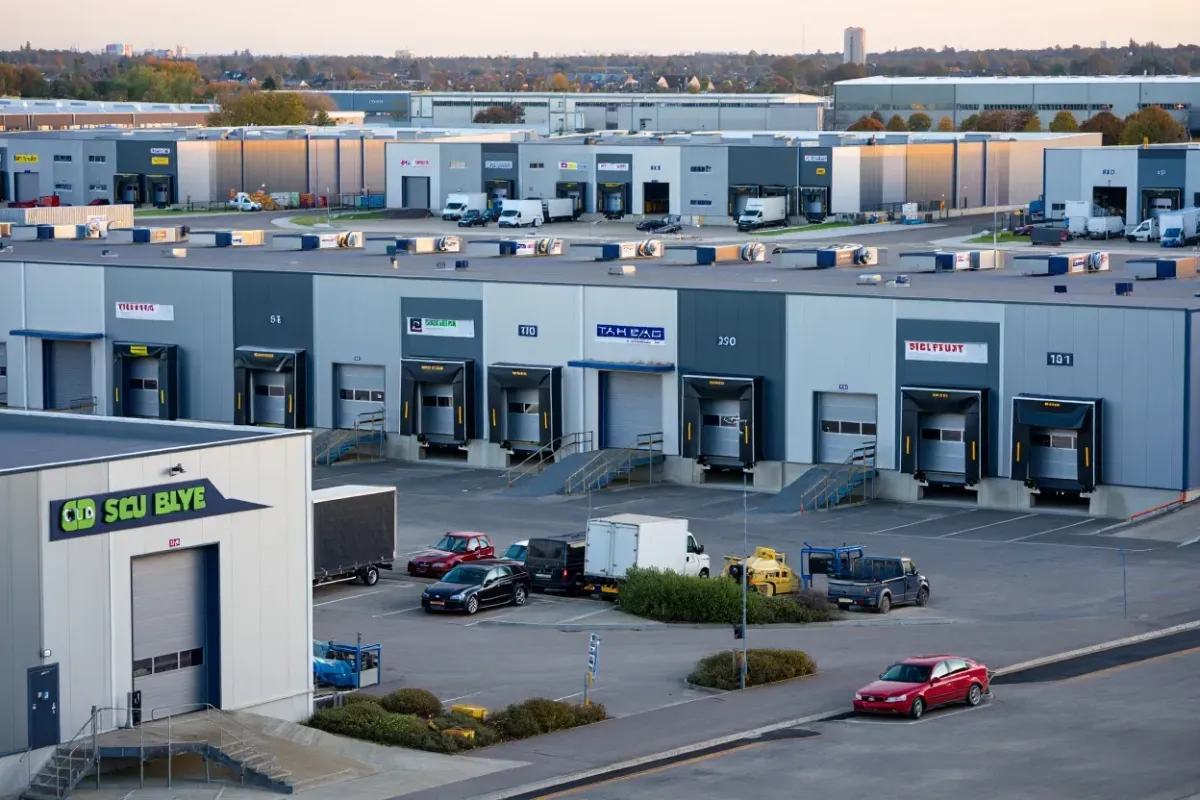
Small-Bay Industrial Real Estate: An Investor’s Guide
Industrial real estate is often associated with enormous distribution centers, high-throughput logistics facilities, and institutional-scale portfolios. Yet some of the most practical commercial spaces serve a different market: local contractors, service businesses, manufacturers, distributors, repair companies, and growing operators that need functional space without the scale or cost of a massive fulfillment center.
These properties are commonly described as small-bay industrial real estate. For investors, small-bay industrial can offer a distinct combination of tenant diversity, functional utility, and value-add opportunity. For owners and operators, it can provide the loading access, clear height, parking, storage, and modest office space needed to run a business efficiently.
What Is Small-Bay Industrial?
Small-bay industrial generally refers to industrial buildings divided into smaller suites or bays, often serving multiple tenants. There is no single universal size definition, but the category typically includes smaller warehouse, flex, light-industrial, and service-industrial spaces rather than very large bulk distribution facilities.
A typical small-bay property may include a drive-in or dock-high door, warehouse or production area, modest office space, parking, and access to major roads. The building may be leased to several businesses, creating a multi-tenant income profile rather than relying on one large occupant.
The most important distinction is not simply square footage. It is functionality. Small-bay tenants often select space because it helps them receive materials, store inventory, complete work, dispatch crews, or serve customers from a convenient location.
Why Tenants Seek Smaller Industrial Spaces
Small and midsized businesses frequently need commercial space that is more capable than a storefront and more affordable or accessible than a large distribution building. A contractor may need a secure yard and storage area. A regional distributor may need loading access close to its customer base. A manufacturer may need power, ventilation, or a layout that supports production.
Because the space is tied to day-to-day operations, location and functionality can matter as much as headline rent. A building with convenient road access, usable loading, adequate parking, and a practical suite layout may remain relevant even as tenant needs evolve.
Small-bay properties can also serve a broad range of industries. That tenant diversity may help reduce dependence on a single business, although diversification is not automatic: investors still need to review tenant concentration, lease expirations, credit quality, business use, and local demand.
The Investment Case for Small-Bay Industrial
For a commercial real estate investor, the attraction of small-bay industrial usually begins with the potential for durable occupancy and multiple sources of rent. A multi-tenant building may provide a more distributed income stream than a single-tenant asset, while leasing activity can create opportunities to improve rents, renew tenants, or upgrade underutilized space.
Value-add potential is another important consideration. Improvements may include better property management, clearer signage, refreshed common areas, improved lighting, more efficient suite layouts, security enhancements, or targeted capital work. The right strategy depends on the asset, tenant base, zoning, and market—not on a generic renovation checklist.
The Oak and Clay Group describes its approach as disciplined and data-driven, with a focus on value-add commercial real estate, hands-on asset management, and industrial warehouse opportunities. Its publicly stated acquisition focus includes Class B and C warehouses with upside potential in Ohio, Pennsylvania, West Virginia, and Maryland.
How to Evaluate a Small-Bay Industrial Property
A strong underwriting process should connect the physical property to the tenant demand that supports its income. Investors should examine the following areas before making a decision.
Location: Is the property near customers, labor, suppliers, highways, and complementary businesses?
Physical utility: Are loading doors, clear height, power, parking, access, and truck circulation adequate?
Tenant profile: Who occupies the space, how concentrated is the rent roll, and how stable are the tenants?
Lease rollover: When do leases expire, and are rents aligned with comparable spaces?
Operating expenses: Which costs are recoverable, and are taxes, insurance, maintenance, and utilities accurately budgeted?
Capital needs: Are the roof, structure, paving, HVAC, electrical systems, and life-safety features in good condition?
Upside plan: Is there a realistic path to stronger occupancy, better operations, or improved tenant retention?
Investors should also review zoning, environmental conditions, title, survey, insurance history, deferred maintenance, and any restrictions on tenant uses. A property can appear attractive on a price-per-square-foot basis while requiring substantial capital or operational attention.
Small-Bay Industrial Is Not Risk-Free
Small-bay industrial real estate has risks that deserve careful attention. Multi-tenant assets may require more leasing and property-management activity than a single-tenant building. Smaller tenants may have less financial resilience. Older buildings may require roof, paving, electrical, or environmental work. Local zoning changes, employment trends, borrowing costs, and tenant demand can affect performance.
The goal of underwriting is not to eliminate risk. It is to identify the risks, price them appropriately, and determine whether the business plan has sufficient margin for uncertainty.
A Practical Next Step for Investors
Small-bay industrial can be a compelling area for investors who value functional real estate, diversified tenant demand, and operational improvement. The best opportunities are not defined by size alone. They are defined by the relationship between location, building utility, tenant needs, acquisition basis, and execution plan.
To learn more about how The Oak and Clay Group evaluates value-add commercial real estate opportunities, visit its investor page. Investors should review offering materials carefully and consult their own legal, tax, and financial advisers before making an investment decision.